
In 1986, I moved from the Tidewater area of Virginia, where I was born and raised, to Florida. Everyone seemed surprised—even though I had sworn I would move there ever since our 1975 family vacation. On that trip, we visited Marco Island, which was then largely undeveloped. I spent my days blissfully wandering the nearly empty snow-white beach—writing, exploring, collecting seashells, and swimming in the warm, clear water. It was the most beautiful place I had ever seen.
After college and six years of teaching in Virginia, I made good on my promise. I moved first to Naples on the Gulf Coast, and then to southeastern Florida, where I lived for over a decade. It’s where I met the families who became my best friends, my godchildren, and eventually their children—my “great” godchildren. It’s where I began my journey to graduate school, which would eventually lead me to South Carolina. It’s where I met and married my husband, Lenny. We eloped to the Keys and went hiking the next day in the Florida Everglades.
That wasn’t my first time hiking in the Everglades. I used to drive there frequently just to spend the day exploring. The largest subtropical wilderness in the United States, the Everglades was designated a national park in 1947 specifically for its biodiversity. Covering 2.5 million acres of forest, marine habitats, wetlands, and more, it is home to countless native plants and animals—and it is surprisingly accessible. Guided tours are available for those with hearing, mobility, or visual challenges. Service dogs are welcome. Campgrounds, boat and tram tours, parking lots, and all visitor centers are wheelchair accessible. Wildlife displays include audio recordings and tactile features, and restroom signage is in Braille.
Once, I stumbled upon a nest of baby alligators. I backed away slowly, knowing Mama Gator couldn’t be far. The Everglades is home to a wide array of reptiles, including iguanas (World Atlas, 2025), as well as endangered species such as the nine-banded armadillo, the Florida black bear, multiple rabbit and fox species, and one of the most critically endangered animals in the southeastern U.S.—the Florida panther (Animal Spot, World Atlas, 2025). Conservation efforts have helped the panther population recover from a low of just 20–30 adults in the 1970s and ’80s to an estimated 120–130 adults today (ABC Action News; Florida Fish and Wildlife Conservation, July 2025).
I also had the misfortune of being stranded in the Everglades once—for a day, a night, and most of the next day, back before cell phones. It was one of the most miserable experiences of my life. We rationed water, and despite my love for hot, humid weather, I was overwhelmed by the heat and devoured by every biting insect imaginable. I suffered third-degree sunburns. When the only person with a working truck refused to help, I started walking. I eventually hit the highway and was picked up by an off-duty Broward County Sheriff, who drove me as far as Fort Lauderdale so I could call Lenny to come get me.
Despite that ordeal, I still love the Everglades. Its value goes beyond wildlife—it’s also a crucial source of fresh water for South Florida. Without the Everglades’ marshlands, this fast-growing metropolitan region would face historic water shortages. While Lake Okeechobee and other water sources exist, transporting water from them would be costly, dangerous, and environmentally harmful. Aquifers, desalination, and purification processes are still evolving, but in the meantime, development continues to encroach on this fragile ecosystem.
And now, the Everglades face a new threat—one that is morally indefensible and environmentally catastrophic.
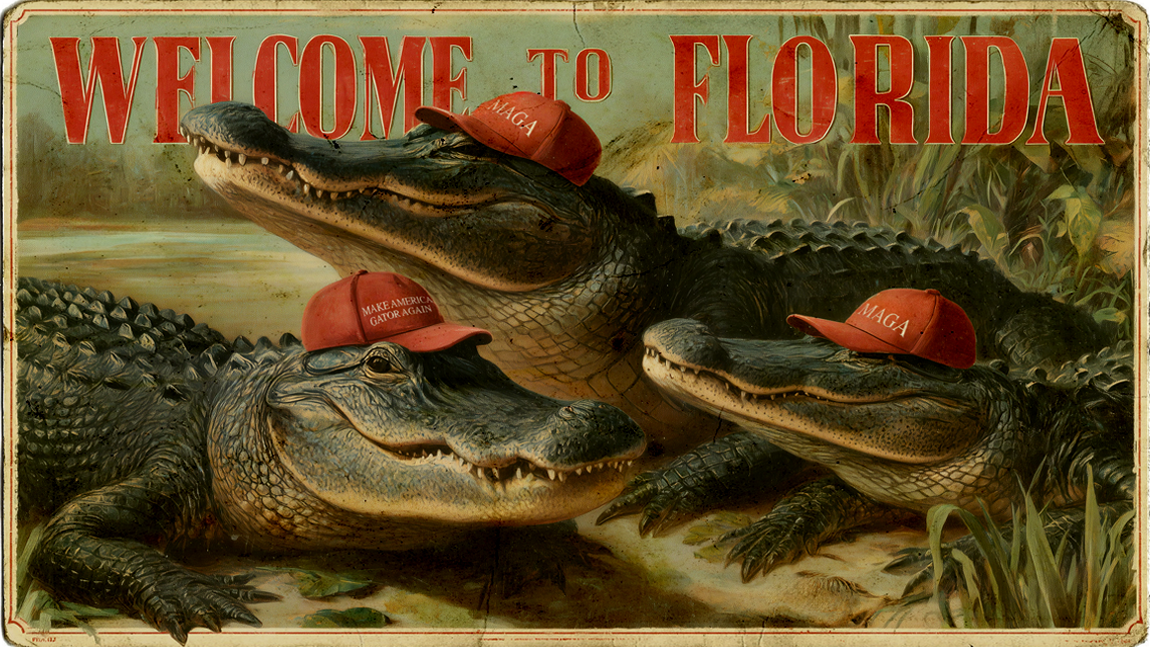
According to CNN reporters Chelsea Bailey and Isabele Rhodes (July 2025), the former Dade-Collier Training and Transition Airport in Collier County is being repurposed into a detention facility housing thousands of undocumented immigrants. Dubbed “Alligator Alcatraz,” this project would place rows of FEMA trailers in the heart of the Everglades. The airport’s expansion had previously been halted due to environmental concerns—but not this time.
The Indigenous community, environmental advocates, and immigrant rights groups are united in opposition. And rightly so. Thomas Kennedy of the Florida Immigrant Coalition warned, “We’re going to have 3,000 people detained in tents in the Everglades, in the middle of the hot Florida summer, during hurricane season. It’s a bad idea all around that must be opposed and stopped.” Yet, as of this writing, no evacuation plan has been announced.
Maria Asuncion Belda of the American Friends Service Committee described the proposal as “a theatricalization of cruelty.” Critics have accused the DeSantis administration of creating a system “engineered to enact suffering” (CNN, July 8, 2025). The financial cost is staggering—$450 million annually, according to the Department of Homeland Security, which expects reimbursement from FEMA and DHS. With 58,000 immigrants already in custody across the U.S. and ICE poised to detain 41,000 at this single site, questions about fiscal waste and inhumanity abound.
Betty Osceola of the Miccosukee Tribe, who has been protesting the construction, called the facility “an affront. This is our ancestral territory. This is our home.”
And it may not stop in Florida.
Governor Henry McMaster and Lt. Governor Pamela Evette have initiated talks with Homeland Security Secretary Kristi Noem to build a similar detention site in South Carolina. Imagine a prison complex built in the middle of your favorite park, hunting ground, fishing hole, or walking trail. That nightmare may soon be reality.
Such a facility would not only devastate our environment—it would damage our state’s economy. Here in Myrtle Beach, we depend on immigrants to keep our hotels, restaurants, and attractions running during the tourist season. Yet, as Shelby Martin of WBTW reported (June 14, 2025), companies are already struggling with deportations, visa denials, and labor shortages. One hotel manager bluntly put it: “There’s an everything shortage here in Myrtle Beach.”
I’d like to close with a poem that captures the spirit of what we’re fighting to protect. But don’t just whisper—shout. Contact your elected officials. Links are provided below. Let’s stand up for our communities, our ecosystems, and our shared humanity.
Everglades Whisper
(Engdic – https://engdic.org/poems-about-Florida/)
In the Everglades’ embrace
Nature’s secrets find their place
Mangroves whisper, waters glide
In their depths, mysteries hide.
Alligators bask, undisturbed
Birds in flight, songs unheard
Nature’s balance, delicate and wild
The Everglades, nature’s own child.
Sunset paints the sky in grace
Reflections in the watery space
In this haven, life abounds—
Everglades, where peace is found.
Contact Your Representatives:
- Office Locations – U.S. Senator Lindsey Graham
- Contact – U.S. Senator Tim Scott
- Offices – U.S. Representative Russell Fry
Help fight the good fight.
The Everglades can’t thank you—but I sure will.